
How the Perimenopause Sets Your Brain on Fire – Ciara Wright PhD at the Functional Medicine Conference
October 2, 2026
Bone health: what testing adds to the picture
October 9, 2026If you’ve been told you have an MTHFR gene variant and you need methylated B vitamins, you’re not alone. It’s one of the most common things we hear in clinic. However, it’s not quite that simple.
Walk into any health shop and you’ll see B vitamins labelled methylated, active or bioavailable. The idea is that some people can’t make the active forms themselves. This could be due to genetic or other factors. For some people and some nutrients, that makes sense. For others, it doesn’t. 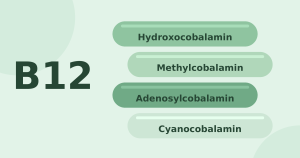
The Folate Cycle
The folate cycle is a critical set of reactions in the body that helps us make new DNA, a process continuously needed to make new, healthy cells. This cycle requires folate, vitamins B12, B6 and B2, and a number of other nutrients and co-factors. It also feeds the methylation cycle, supplying the methyl groups we use to make neurotransmitters, clear hormones and switch genes on and off. Before folate can be used, it needs to be methylated; that is, a methyl group is added to folate to make methylfolate, the active form. Vitamin B12 subsequently takes that methyl group from methylfolate and carries it on into the remainder of the cycle.
Where does MTHFR fit in?
MTHFR is an enzyme whose job is to turn folate into its active form, methylfolate. Common MTHFR gene variants such as C677T and A1298C can make this enzyme a bit slower.
If the enzyme is slower, it makes sense to hand your body the finished product. Methylfolate supplements do exactly that. This is where taking the methylated form clearly makes sense. And in fact, some research suggests that taking too much of the inactive form, folic acid, in this situation could actually be harmful as it builds up in a body that is slow to use it.
However, here is where the popular advice goes off track. Having a genetic variant of the MTHFR gene has nothing to do with B12. It only activates folate. When people talk about taking ‘methylated B vitamins’ they are often referring to taking methylfolate and needing to take methylcobalamin, a form of B12. However, whatever form of B12 you take, be it hydroxocobalamin, cyanocobalamin, methylcobalamin or adenosylcobalamin, your cells strip off the extra bit attached to it and rebuild the working forms they need. Therefore the methyl group of methylcobalamin is removed on arrival, and not delivered at all to your methylation pool. The vitamin B12 is then just the carrier in the folate cycle, which takes the methyl group from the methylfolate – it does not need to be already methylated.
Therefore, all the supplement forms of B12 are real, usable B12. None contribute methyl groups, and none of them need to be methylated once in the body, so there is no genetic concern here. What is often overlooked however, is that they are processed differently in the body and therein, lies the real question about which one might suit you best.
Which form of B12 is best?
| Form of B12 | What your cells need to process the supplement form | Worth knowing |
|---|---|---|
| Hydroxocobalamin | Niacin-derived energy carrier (NADPH) | Often well tolerated, and useful to rectify deficiency; a common choice in clinical practice |
| Methylcobalamin | Glutathione (your body’s main antioxidant) | Uses up some glutathione to be processed |
| Adenosylcobalamin | Glutathione | Uses up some glutathione to be processed; rebuilding this form after initial processing may also be a lot slower |
| Cyanocobalamin | NADPH; releases a trace of cyanide | Avoid if you have kidney failure, Leber’s optic neuropathy, or smoke heavily. It also contains unwanted, albeit trace amounts, of cyanide so choose another form |
For most people, any form will raise B12 levels, and the differences in requirements here are extremely small in real terms. But in some situations, the best form may differ. For example, in conditions of chronic inflammation, high oxidative stress, or low glutathione, hydroxocobalamin may be easier for the body to process. Regarding the NADPH, it’s worth noting that all of the forms actually need NADPH at various steps in the process.
What about over-methylation and anxiety?
Some people feel jittery, anxious or wired after starting methylated B vitamins. It’s a real experience and worth taking seriously.
One theory relates to a gene called COMT, which uses methyl groups to clear stress chemicals like dopamine and adrenaline. Some people have gene variations that slow this enzyme, often referred to as a ‘slow COMT’, and they may be more sensitive as a result. The usual explanation is that a slow COMT can’t keep pace with a higher load of methyl donors. A more likely mechanism is that methylfolate supports the production of dopamine and adrenaline, so more is made while a slow COMT struggles to clear it. Either way, the build-up may leave people feeling wired, anxious or unable to sleep.
Methylcobalamin, as a form of B12, would not contribute to this. As we’ve seen, its methyl group is removed as soon as it enters the cell and doesn’t add to the body’s methylation pool. Once inside the cell, B12 in any form simply passes on the methyl group that methylfolate provides.
A second theory relates to the methylation of genes themselves. Adding methyl groups to DNA is one of the main ways your body switches genes off, and removing them helps switch genes back on. This process is tightly controlled by enzymes and cell signals, and the liver has its own system for clearing excess methyl groups. However, there is some evidence that very high intakes of methyl donors can shift methylation at certain genes, particularly during pregnancy and early development, and to a lesser extent in adults. What this means in practice is still unclear. It’s unlikely to explain feeling wired after taking a methylated supplement, but it is a reminder that excessive doses of any supplement may carry risks we don’t yet fully understand.
Test don’t guess
The most reliable way to know what your body needs is to measure how it’s actually absorbing and using these nutrients. B12 absorption can be affected by digestive issues, autoimmune issues that inhibit absorption, and even bacterial imbalances in the gut. Some people need sublingual administration or injections if they are unable to absorb B12.
In other cases a standard B12 blood test can look normal, or even high, while your cells still aren’t getting what they need. There are also immune issues that can cause clumping of B12 together with immune complexes (macroB12) and autoimmune conditions that block transport of your B12 into where it is needed. Some of these complex conditions are difficult to get tested, but that’s no reason to ignore a suspiciously high serum B12.
That’s why we look at the whole picture:
– Active B12 (HoloTC) shows how much B12 is available to your cells
– MMA is the best measure of intracellular B12 – this is a metabolite that requires intracellular B12 for it to be broken down, thus a high level means not enough B12 is inside your cells, doing its job
– Homocysteine is a marker of the folate cycle, it can be elevated in states of B vitamin deficiencies and other co-factors
– Folate and the other B vitamins, including B1, B2, B3, B5 and B6, since they all work as a team
With those results, we can choose the right nutrients, the right form and the right dose for you.
Would you like to find out more about our Avanced B Vitamin Testing? Get in touch with us today or share this post with someone who could benefit from evidence-based nutritional support.