

Fasting Insulin - Insulin Resistance


Fasting Insulin - Insulin Resistance
€60.00
Even with a normal glucose level in the blood, insulin resistance can be a precursor to diabetes, cardiovascular disease and metabolic syndrome. Insulin resistance happens when your body needs to make more and more insulin to meet the demands of your sugar levels.
Who can benefit from this test?
Your nutritionist may recommend this test if you have:
- Obesity, abdominal obesity, weight gain or weight loss resistance
- Family/personal history of diabetes or pre-diabetes
- High blood pressure, family/personal history of heart disease or stroke
- Chronic fatigue or energy and metabolism issues
- Concerns about healthy ageing and disease prevention

Learn More about our Fasting Insulin - Insulin Resistance Test
At-home Dried Blood Spot
Measuring insulin is much more informative than a regular blood glucose test. Insulin resistance is when the signals to our cells to take up sugar out of the blood becomes disrupted. The body has to produce more and more insulin in order to manage the blood glucose level. Therefore, the blood glucose level may stay normal, but the insulin level is increasing. This will eventually lead to metabolic conditions, diabetes, and is linked with inflammation. But if caught early, this responds very well to nutritional intervention.
This test measures:
- Fasting insulin
Works well with:
- Heart Health Profile
- Continuous Glucose Monitor
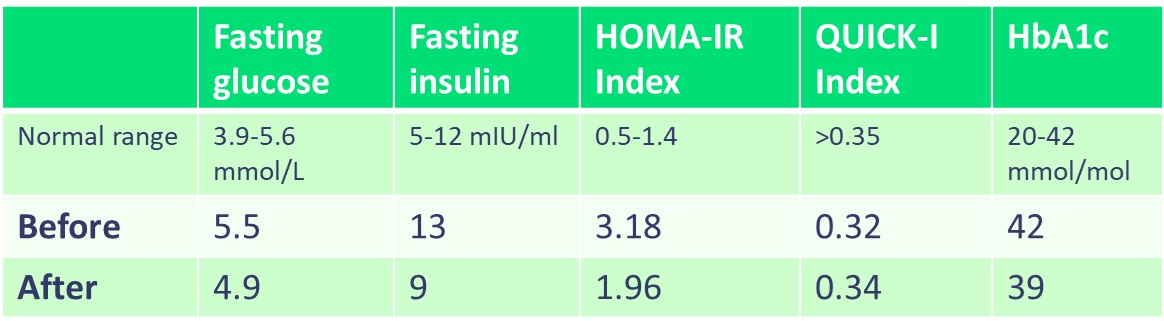
Keith was overweight and had diabetes in his family. He had a high stress job and was eating on the run. Keith carried out the blood sugar & insulin resistance profile to try to reduce his risk of diabetes.
His fasting glucose was normal and his HbA1c was borderline for the pre-diabetic range. His fasting insulin was above optimal and indicating early signs of insulin resistance.
Keith started on a healthy eating plan, tailored to suit his busy lifestyle and some supportive supplements. He also used a continuous glucose monitor for 2 weeks to see how his diet was affecting his sugar levels on a daily basis. After 3 months, Keith repeated his tests and his HbA1c had decreased and markers of insulin resistance had improved. He maintained his new healthy lifestyle and was losing weight and feeling better.