Vascular Endothelial Damage Profile

Vascular Endothelial Damage Profile
€300.00 + phlebotomy and shipping
Vascular damage is proposed to be a key pathology in Long Covid, and likely also in ME/CFS and other infection associated chronic illness. Damage to the endothelium, the cells that line the blood vessels, triggers inflammation and vascular dysfunction which alters the way blood vessels contract and relax, leading to heart rate issues, dizzyness, restricted blood flow, and intense fatigue and many other downstream symptoms.
Vascular inflammation can also trigger ongoing formation of microclotting, and damage to red cells creating a vicious cycle, reducing oxygen delivery to cells for energy production.
Who can benefit from this test?
Your nutritionist may recommend this test if you have:
- Complex conditions
- Long covid, ME/CFS, chronic fatigue syndrome

Learn More about our Advanced Immune Test
Blood test (phlebotomy)
The Vascular Endothelial Damage Profile can help direct focus in a complex condition – is blood flow and endothelial damage a key pathology? This test may help tailor a supplement plan to reduce endothelial damage, or be helpful in pursuing medical care. Your Nutritionist will discuss the benefits and limitations of this test with you.
Phlebotomy can be carried out at our Dublin clinic or locations around the country. Please enquire with our team. Phlebotomy carries an additional charge.
This test measures:
- LDH Marker of cellular stress and microvascular injury with mild elevations in ongoing tissue hypoxia (low oxygen) or endothelial injury i.e. damage to the lining of blood vessels
- VEGF promotes new blood vessel formation, increases vascular permeability/ ‘leakiness’ and is increased in response to hypoxia, inflammation, and endothelial injury. It may then decline in later stages of pathology where endothelial repair is diminished
- Endothelial progenitor cells (EPCs) help repair /replace damaged endothelial cells, and should be increased in initial stages of inflammation. Reduced EPC could reflect inadequate repair of blood vessels and ongoing damage
- MCP-1 (CCL2) — Monocyte Chemoattractant Protein-1 attracts immune cells to the endothelium when it is damaged or injured, indicates chronic low-grade inflammation and immune signalling from the endothelium
- Haptoglobin - decreased in ME/CFS and was shown to be further decreased during post-exertional malaise (PEM), and on repeat rupture of red cells in microclotting
- ADMA – as a marker of endothelial dysfunction, increases in Long Covid vascular damage
Works well with:
- Fibrinogen as a measure of clotting risk
- CRP as a measure of inflammation
- Amino acid panel to assess arginine/ ADMA ratio and markers of nitric oxide dysfunction
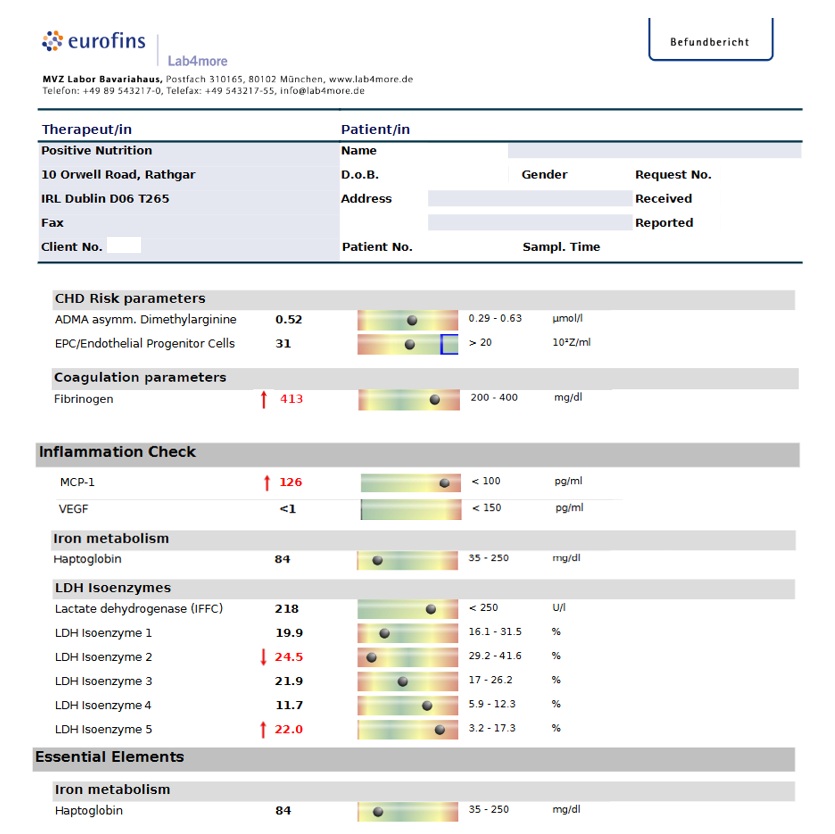
Sarah had Long Covid for four years and was struggling with POTS (postural orthostatic tachycardia syndrome), with blood pooling in her legs, intense fatigue and brain fog. She also displayed the Rumpel–Leede sign, with broken blood vessels apparent after using a blood pressure cuff. She had slightly high cholesterol since her initial covid infection and wanted to find out more about her blood vessel health.
Key findings:
- Her fibrinogen levels were high, which she discussed with her consultant for treatment for possible hypercoagulation
- MCP-1 (Monocyte Chemoattractant Protein-1) was raised. The is a signalling chemical that recruits immune cells from the bloodstream into the vessel wall, where they can perpetuate inflammation. Indicates chronic immune activation, monocyte recruitment, and ongoing vascular inflammatory signalling
- VEGF was very low, which could be normal, or could mean reduced vascular repair in chronic or later stages of damage
- Total LDH was normal, with a slightly higher percentage of LDH5 – this is an enzyme that spills into blood with cellular or tissue damage. LDH5 is mainly from the liver or muscle cells. Here higher LDH5 might indicate muscle stress and anaerobic metabolism