


Small Intestinal Bacterial Overgrowth (SIBO) test

SIBO Test
€185.00
Small Intestinal Bacterial Overgrowth (SIBO) is a common cause of IBS symptoms. If identified, SIBO can in many cases be eradicated or managed.
Who can benefit from this test?
Your nutritionist may recommend this test if you have:
- Digestive issues including reflux, irritated stomach or bowel, distension or bloating, feelings of extreme fullness after eating, cramps, diarrhoea or constipation, fatty or floating stools
- Reactions to foods which may be difficult to pin-point
- Immune-related issues such as skin rashes, unexplained joint or muscle pain, autoimmune or immune-related fertility issues
- Unexplained fatigue, brain fog, energy imbalances
- Weight loss-resistance, problems with insulin resistance

Learn More about our SIBO Tests
Breath test (in clinic or at home)
Under normal conditions, most of our bacteria are far down the digestive tract, in the large intestine. The small intestine should have much lower numbers of bacteria. However, in SIBO, larger numbers of bacteria are found in the small intestine, causing a range of symptoms.
The SIBO test works by measuring the gas production by bacteria in your small and large intestine. For accurate results, you will need to follow a strict diet for 1-2 days pre test and you will be provided with this dietary plan in advance of your test.
The test measures two types of gas – hydrogen and methane. This can help to identify different types of bacteria in the gut so that your Nutritionist can tailor your protocol effectively. The presence of methane-producing bacteria (Intestinal Methanogen Overgrowth, IMO) are more often associated with constipation where hydrogen-producing bacteria are usually associated with loose stools or diarrhoea.
Lactulose (a sweet liquid) is consumed. Once bacteria come into contact with this liquid, they will ferment the sugar and produce gas. This goes into your bloodstream and out in your breath. As the solution travels down through your gut, gas is produced when there is bacteria present. If you produce gas early on in the test procedure, this means that the bacteria is high up in the digestive tract – in the small intestine. If you do not produce any gas until very late in the test, this can be simply due to normal bacteria much lower down in the digestive tract. Therefore by measuring the output of gas over time, we can determine where the bacteria is located and how much there is.
This test measures:
- Hydrogen gas and methane gas production in the breath over three hours
We published this case study in a medical journal to demonstrate the efficacy of testing SIBO and treating it with a herbal antimicrobial formula.
‘IBS symptoms described by the patient as severe for at least 10 years. Symptoms included bloating, cramps, flatulence and constipation along with fatigue. Intolerance to garlic was severe, causing vomiting and thus the patient completely avoided its consumption.
A strict low FODMAP diet was recommended under the supervision of a nutritional therapist using the Monash University FODMAP University App for the most up-to-date food list. A herbal supplement termed Candex SIBO (Nutri Advanced) was used to support the eradication of small intestinal bacteria.
The follow-up breath test revealed a marked improvement. The result was classified as negative for SIBO. Hydrogen gas output indicated normal colonic bacteria and methane was completely absent from the sample throughout.
The patient reported feeling considerably better and her quality of life global score increased from 42 to 71. Specifically, in the categories of activity and discomfort where she was previously categorised as extreme, there was a marked improvement, where her digestive symptoms no longer had an impact on her quality of life.’
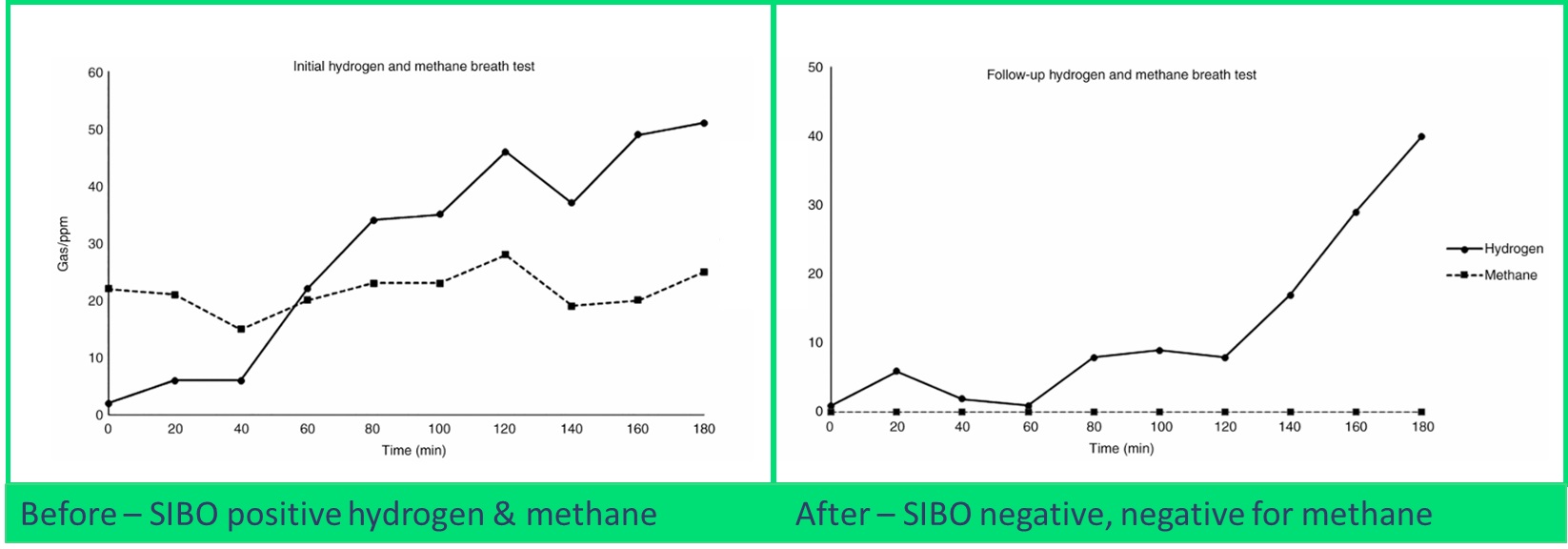
Reference: C Wright, M Dooley, H Leeson (2021) Eradication of Small Intestinal Bacterial Overgrowth (SIBO) in Irritable Bowel Syndrome using herbal therapy; a case study. International Journal of Functional Nutrition 2:5
Open access paper here