

Food Intolerance - Food Map IgG Test


Learn More about our our Food Map IgG Test

Dried blood spot (at home)

This is a simple at-home test using a finger prick and dried blood test card. This measures the IgG immune reaction to 190 different foods plus yeast and Candida. Removing foods that cause high levels of reactions can help during a gut healing protocol. It is not advisable to follow a very restricted diet in the long term. Re-introduction of foods can be carried out with the support of your Nutritionist.

This test measures:

  • Dairy – 9 different forms of cow, goat and sheep dairy
  • Pulses – 13 beans and peas, including soy and tofu
  • Grains/ Gluten – 15 grains including wheat, types of gluten
  • Fruits – 29 fruits, some of which cross react with grass and tree pollen in oral allergy syndrome
  • Vegetables – 41 vegetables
  • Fish – 25 species and Meat – 7 meats and Eggs
  • Nuts and Seeds – 17 varieties, does not test for allergies
  • Herbs and spices and other e.g. tea, coffee, cocoa, cane sugar

Additional:

  • IgG reaction to Candida and yeast

Works well with:

  • GI Ecologix test to determine underlying cause of inflammation and leaky gut which in many cases leads to the food intolerance reactions

Caroline was experiencing digestive issues which were difficult to treat. She had leaky gut and histamine reactions/ MCAS that would cause a swelling feeling near her throat, itching and headaches. While she received treatment for MCAS and was following a gut healing protocol, she carried out an IgG Food Map to see whether any particular foods were very high and should be excluded altogether.

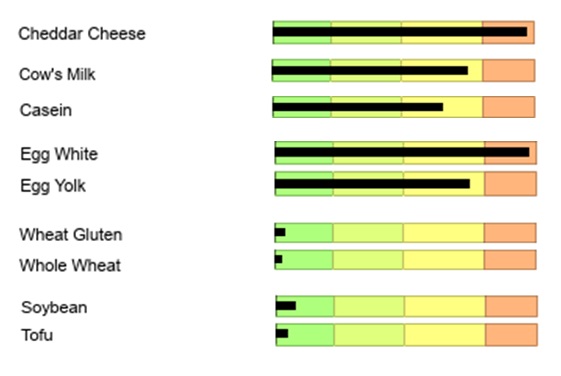
Her results showed high levels of IgG against dairy and egg but normal reactions to gluten and soy. There were many other mild reactions identified but her main finding was to remove dairy and egg from her diet completely while she worked on her digestive issues.

After a gut healing protocol and when her MCAS came under control with medication, she re-introduced small amounts of good quality yoghurt into her diet. Her diet was very varied and her gut was much less reactive.

Key Findings [excerpt from test]:

  • No IgG reactions to gluten or soy, maintain in diet if desired
  • High reactions to dairy and eggs, remove temporarily from diet. Be cautious while re-introducing and check for reactions
  • Mild reactions to other foods, no need to exclude fully though reduce intake if in high amounts
IgG Food MAP with Candida + Yeast Test FAQ

How can this test help me feel better?
This test looks at IgG-mediated immune responses to a wide range of foods, alongside Candida and yeast markers. In some individuals, repeated exposure to reactive foods may contribute to symptoms such as bloating, headaches, skin issues, fatigue, sinus congestion, or joint discomfort. By identifying potential food-related immune triggers, the test can help guide a structured, time-limited elimination and reintroduction plan. This allows us to personalise dietary recommendations rather than relying on guesswork or overly restrictive diets. It can be particularly helpful where symptoms are chronic, fluctuating, or difficult to clearly link to specific foods.
I’ve already done a GI Map or other stool test, how is this different?
A GI Map or other stool test assesses the gut microbiome, pathogens, digestive function, and inflammation within the gastrointestinal tract. It tells us what is present and active in the stool at the time of testing. The IgG Food MAP looks instead at systemic immune responses in the blood, including responses to foods and to Candida and yeast antigens. This can be particularly helpful because yeast-related issues do not always show up clearly on stool testing — especially if yeast is present at low levels, is intermittently active, or is contributing more to immune activation than overt overgrowth. In these cases, a person may experience symptoms associated with yeast or fungal sensitivity despite a “normal” stool result. IgG testing can help highlight whether the immune system appears to be reacting to yeast exposure, offering a different — and sometimes complementary — layer of insight to stool-based testing.
Should I do this test instead of a GI Map?
In most cases, no — we recommend starting with a GI Map or comprehensive stool test first. If you are experiencing digestive symptoms such as bloating, altered bowel habits, post-antibiotic changes, recurrent infections, or signs of dysbiosis, it is important to assess the gut environment directly. Addressing microbiome imbalance, inflammation, or digestive dysfunction often reduces food-related symptoms without the need for additional restriction. The IgG Food MAP is generally considered a secondary or follow-on test, used when: • Symptoms persist despite gut treatment • Food-related reactions remain unclear • Yeast reactivity is suspected but not evident on stool testing • There is a need for more personalised dietary refinement Starting with gut testing helps avoid unnecessary restriction and ensures that underlying drivers are properly addressed first.
Should I do this test instead of a SIBO test?
A SIBO test assesses bacterial overgrowth in the small intestine and is primarily indicated when there is significant bloating, gas, distension, or other IBS-type symptoms. IgG food testing does not diagnose SIBO and does not assess small intestinal bacterial overgrowth. If classic SIBO symptoms are present, breath testing is usually the more appropriate first step. If symptoms persist after SIBO treatment, or if immune reactivity is suspected as a contributing factor, then this test may be helpful.
Are there any limitations to this test?
Yes — it’s important to understand what this test can and cannot tell you. • IgG testing reflects immune responses to foods and yeasts, not actual gut ecology. A positive result does not automatically indicate that a food must be permanently eliminated. • It does not identify underlying digestive imbalances, microbiome disruption, or infections that may be driving symptoms. • For a root-cause approach, a stool test such as a GI Map is often more informative, as it evaluates microbiome balance, pathogens, inflammation, and digestive function directly. This test is best used as a guided clinical tool in combination with symptom history and, when appropriate, gut testing. Over-restriction without professional guidance can negatively impact nutritional adequacy and gut health.