


Advanced Iron studies and Anaemia


Learn More about our Advanced Iron studies and Anaemia Tests

Iron studies usually include serum iron, ferritin (iron stores) and transferrin saturation. A full blood count can assess the number of red cells and their iron-containing haemoglobin. These tests can be organised as a basic iron analysis.

However, there are certain circumstances which require more comprehensive information. For example if your ferritin is high due to inflammation, this is a sign of underlying infection or a chronic inflammatory process. In other cases, your ferritin may be persistently low, anaemia is not resolving with iron supplements, or your iron levels are not rising. There may be underlying issues with iron absorption. Or, the anaemia may not be iron related and could be due to deficiency in B12, folate or co-factors such as copper or zinc.

A deeper understanding of the root cause allows your Nutritionist to tailor your nutrition and supplement plan for a targeted approach.

Phlebotomy can be carried out at our Dublin clinic or locations around the country. Please enquire with our team. Phlebotomy carries an additional charge.

This test measures:

  • Full blood count
  • Iron in whole blood
  • Transferrin, transferrin saturation and transferrin receptor
  • Hepcidin – an important signalling molecule for iron absorption
  • CRP to assess inflammation
  • Co-factors copper, zinc and caeruloplasmin
  • Optional: methylmalonic acid (urine) to accurately assess Vitamin B12 activity
  • Optional: serum folate and B12 levels if not already measured

Works well with:

  • Genetic testing for haemochromatosis or iron overload (coming soon)

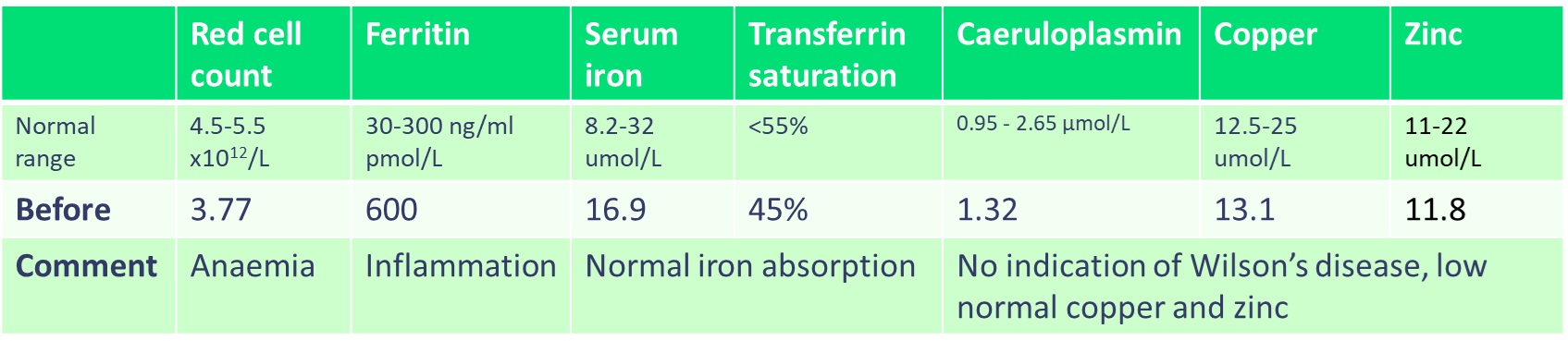
Donald had a low red cell count and was experiencing fatigue. He understood from his GP and regular blood tests that his iron levels were high and wanted advice on how to manage this with diet.

With further investigation, it was apparent that Donald did not have high levels of iron absorption but actually anaemia of chronic inflammation. His ferritin levels were very high as a result, but his markers of iron absorption and co-factors were normal. Genetic testing ruled out haemochromatosis to be thorough. Donald was advised to avoid iron supplementation but to continue with iron in his diet due to his anaemia and fatigue.

Donald then underwent microbiome testing to assess any source of chronic inflammation. An ongoing chronic Candida overgrowth was identified along with additional dysbiosis. He continues to work on his gut health to address chronic inflammation which is causing his high ferritin and anaemia.

Key findings:

  • Very high levels of ferritin
  • Normal levels of absorption and co-factors
  • Low red cells – anaemia of chronic inflammation
Advanced Iron Studies FAQ

How can this test help me feel better?
Iron balance is critical for energy production, oxygen delivery, immune function, cognitive performance, and hormonal health. However, both iron deficiency and iron overload can cause fatigue, poor recovery, hair loss, low mood, and reduced resilience. This Advanced Iron Panel goes far beyond ferritin. It includes: • Full blood count • Whole blood iron • Transferrin, transferrin saturation, and transferrin receptor • Hepcidin (the key regulator of iron absorption) • CRP to assess inflammation • Copper, zinc, and caeruloplasmin (important iron co-factors) By looking at iron transport, regulation, storage, and inflammatory influence, we can determine whether symptoms are due to true deficiency, functional deficiency, inflammation-driven iron sequestration, or overload — and tailor a precise plan accordingly.
I’ve already had my iron done with my GP, how is this different?
Standard GP iron testing usually focuses on serum iron and sometimes ferritin. It also commonly relies on the absence of anaemia to rule out iron deficiency. This is a marker of late stage iron deficiency and much earlier than this, there is iron deficiency in the bone marrow and symptoms are often present – this has been clinically proven, especially in women. Iron metabolism is complex. Levels can appear “normal” while you may still be experiencing symptoms due to inflammation, impaired absorption, functional deficiency, or early overload patterns. This advanced panel looks at iron dynamics more comprehensively, helping us distinguish between true deficiency, inflammatory iron sequestration, dysregulation, or excess. This allows for a more precise and safer approach to supplementation or management, rather than relying on ferritin alone. If your iron has been labelled “normal” but you still feel fatigued — or if results have been inconsistent — book a consultation to explore whether this test is appropriate for you.
Can this test help with male and female fertility?
Yes. Iron balance plays an important role in ovulation, endometrial health, sperm development, thyroid function, and overall reproductive resilience. Both iron deficiency and iron overload can negatively affect fertility outcomes. Subtle dysregulation may also influence oxidative stress and hormonal balance. This panel helps us optimise iron status carefully and strategically — particularly important when preparing for conception.
I have Long Covid or ME/CFS, can this test help?
Post-viral syndromes are often associated with persistent inflammation and altered iron regulation. Many viruses trigger the body to sequester iron as a defensive response, making it less available to cells even when ferritin appears normal. This functional iron restriction can contribute to fatigue, cognitive issues, and poor recovery, which are common in Long Covid and ME/CFS. This Advanced Iron Panel helps identify whether iron dysregulation, inflammatory sequestration, or co-factor imbalance may be contributing to ongoing symptoms. By understanding your individual iron dynamics, we can design a more precise and personalised strategy for supporting energy, recovery, and overall metabolic health.
Can I add anything onto this panel?
Yes. Depending on your clinical picture, we may recommend adding markers that assess functional B12 activity or folate status, particularly when investigating fatigue, neurological symptoms, or anaemia patterns.
I have hemochromatosis, can this test help me?
Yes. In haemochromatosis, iron overload is driven by altered regulatory signalling rather than simple dietary excess. This advanced panel can provide deeper insight into iron dynamics and co-factor balance, complementing specialist monitoring. It does not replace medical management or phlebotomy protocols, but it can offer additional context for understanding your iron regulation. If you have haemochromatosis and would like a more comprehensive assessment of your iron metabolism, book a consultation to discuss whether this panel is appropriate alongside your current care.