

Vaginal Health Test


Vaginal Health Test
€250.00
Disruption of vaginal microbiota composition, termed dysbiosis, has been linked to bacterial vaginosis (BV) and recurrent infections. Dysbiosis can be related to oestrogen deficiencies and ageing.
The vaginal microbiome is also key to managing the immune environment of the implanting embryo. Dysbiosis is associated with infertility, miscarriage and premature delivery in pregnant women.
Who can benefit from this test?
Your nutritionist may recommend this test if you have:
- Difficulties conceiving or are undergoing assisted reproduction or IVF/ ICSI
- History of recurrent miscarriage or implantation failure
- Immune-related fertility issues or ‘unexplained’ infertility
- Vaginal health issues including recurrent infections and / or persistent irritation

Learn More about our Vaginal Health Test
Swab test (at-home)
This ground-breaking test assesses the vaginal microbiome including beneficial bacteria and infection-causing bacteria and yeast. Sometimes these bacteria are not readily identified by regular testing / vaginal swabs making it difficult to treat the underlying cause. The technique used in this test to examine the microbe populations looks for the presence of DNA (by shotgun technique). This is the most technologically advanced vaginal microbiome profile to provide accurate identification of the microbiota along with any unwanted bacteria or yeast.
This test measures:
- Multiple beneficial Lactobacillus species
- Opportunistic bacteria which can result in overgrowth and dysbiosis
- Bacteria associated with aerobic vaginitis, bacterial vaginosis (BV) and infertility
- Candida species which cause thrush and inflammation
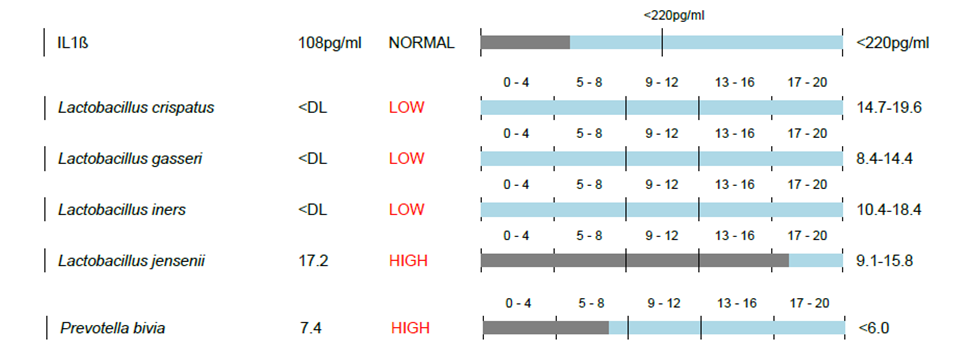
Elena was undergoing IVF treatment with sperm donor, and had several failed transfers. She had one remaining embryo left and was very keen to find the underlying cause for failed implantation. Immune testing had identified some inflammation and her oestrogen levels were imbalanced. This lead us to assess her vaginal microbiome, to support the environment for successful implantation during her final IVF cycle. The test identified very low levels of beneficial bacteria and she had elevated levels of a bacteria which could cause dysbiosis.
Along with a comprehensive protocol to address other causes, Elena supported her vaginal balance with prebiotics, probiotics and a gentle anti-microbial to reduce the unwanted bacteria. Her final IVF cycle was successful and she had a beautiful baby boy 9 months later.
Key findings (excerpt from test):
- Very low levels of some beneficial Lactobacillus strains
- Inflammatory marker higher than optimal
- High level of unwanted strain Prevotella