

Organic Acids Test (OAT)


Organic Acids Test (OAT)
€230.00
This test measures a wide number of markers of nutritional and metabolic health. It is most often used in complex conditions to rule in or out certain metabolic ‘blocks’ and mitochondrial issues.
Who can benefit from this test?
Your nutritionist may recommend this test if you have:
- Complex conditions
- Long covid, ME/CFS, chronic fatigue syndrome

Learn More about our Organic Acids Test
Urine test (at-home)
This is a simple urine test that can assess a wide number of nutritional and metabolic markers. Some complex conditions can be identified or ruled out with this test. Often it is pattern of these markers that can shed light on the root cause of complex metabolic or fatigue conditions. There are also a number of useful nutrient markers.
This test measures:
- Energy production efficiency - lactate and glucose breakdown for energy and efficiency of using fats for fuel
- Mitochondrial metabolites – evaluates for mitochondrial dysfunction
- Markers of inflammation pathways, neuroinflammation and calming via the tryptophan pathway and gut bacteria via polyphenols
- Neurotransmitter metabolites – evaluates for phenylalanine, tyrosine and tryptophan metabolism linked to neurotransmitter balance
- Overnight cortisol measurement and aldosterone, an important hormone in blood pressure and blood volume which can be relevant in POTS or chronic fatigue
- Useful markers of Candida and other bacteria in the gut (not as extensive as a stool test), oxalates
- Nutritional markers of B vitamins, CoQ10, glutathione, folate cycle
Stacey had Long Covid for 18 months and was experiencing extreme fatigue and post-exertional malaise (PEM) amongst other symptoms. She carried out an organic acids test alongside a nutritional evaluation to see if she could support her energy metabolism, and rule out any further complex issues.
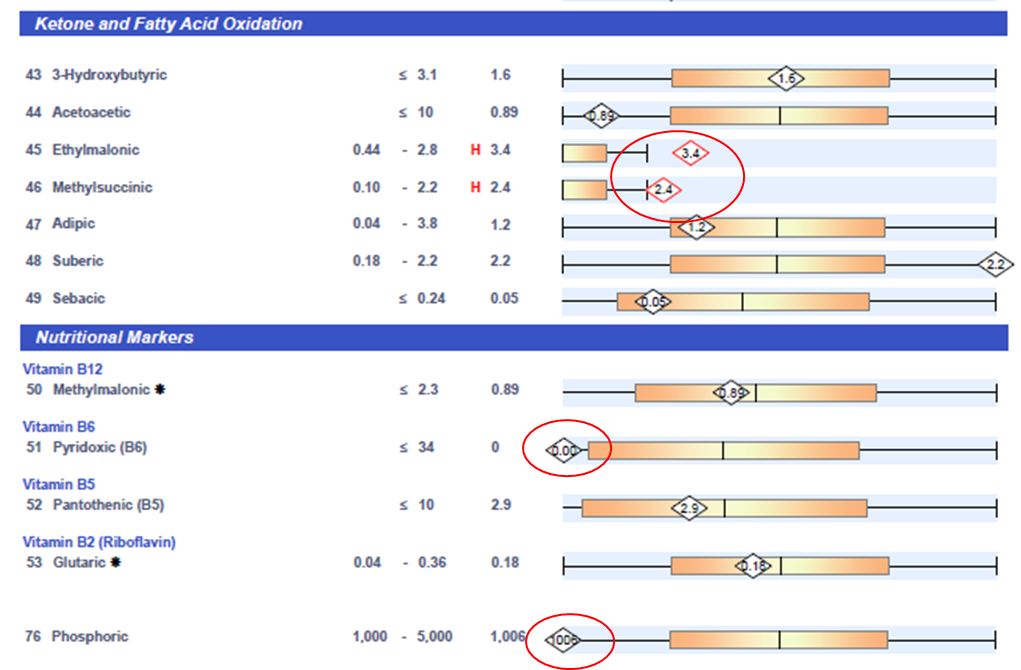
Her results did not identify any severe underlying mitochondrial disorders. Her neurotransmitter levels were normal, along with tryptophan and quinolinic/ kynurenic ratios which are a potential problem in some cases of Long Covid. There was some possible issues with her fat metabolism, which she needed to support with carnitine and B vitamins.
In conjunction with her other nutritional tests, this organic acids tests also highlighted a potential issue with her vitamin B6 pathway, given her low B6 marker and low phosphoric acid. This was a useful pathway for her to support and may have impacted her production of acetylcholine.
Key Findings [excerpt from test]:
- No underlying complex mitochondrial issues
- Poor fat metabolism which needed support to produce energy
- Indicators of issue with vitamin B6 pathway