

GI Map Test


GI Map test
€540.00
This test measures key markers of gut health, inflammation and the bacteria, yeasts and parasites that make up your gut microbiome. Your good bacteria are essential for health and the regulation of your immune system. Disruption of bacterial balance, termed dysbiosis, can lead to a number of digestive issues, food intolerances and wide reaching symptoms as the gut affects so much of our health.
Who can benefit from this test?
Your nutritionist may recommend this test if you have:
- Digestive issues including reflux, irritated stomach or bowel, distension or bloating, feelings of extreme fullness after eating, cramps, diarrhoea or constipation, fatty or floating stools
- Inflammatory Bowel Disease such as Chron’s Disease or Ulcerative Colitis
- Reactions to foods which may be difficult to pin-point
- Immune-related issues such as skin rashes, unexplained joint or muscle pain, autoimmune conditions or immune-related fertility issues
- Unexplained fatigue, brain fog, energy imbalances
- Weight loss-resistance, problems with insulin resistance

Learn More about our GI Map Test
Stool sample (at home)
This test is a comprehensive analysis of your gut microbiome. The technique used to examine the microbe populations looks for the presence of DNA (by PCR) which is much more accurate than relying on the growth of the microbes under laboratory conditions.
Importantly, this test also includes markers of inflammation, leaky gut and digestive capacity. This is critical information for your Nutritionist to tailor your protocol safely and effectively.
This test measures:
This test measures 7 host markers and 62 clinically relevant microbial strains which includes the presence of good and bad bacteria, yeast and parasites. It also tests for digestive capacity by measuring digestive enzyme production, and important markers of immune defences and inflammation, occult blood, bile acids and leaky gut using the marker zonulin.
- Calprotectin - inflammatory marker
- Zonulin - leaky gut marker
- sIgA immune defences
- Eosinophil Activation Protein (EPX)
- Pancreatic Elastase
- Bile Acids
- Steatocrit - fat absorption
- Beta-glucuronidase - oestrogen recycling
- Beneficial bacteria
- Short chain fatty acids
- H pylori
- Pathogenic bacteria and viruses
- Sulphur bacteria
- Methane producing bacteria
- LPS producing bacteria
- Histamine producing bacteria
- Yeasts including Candida
- Parasites
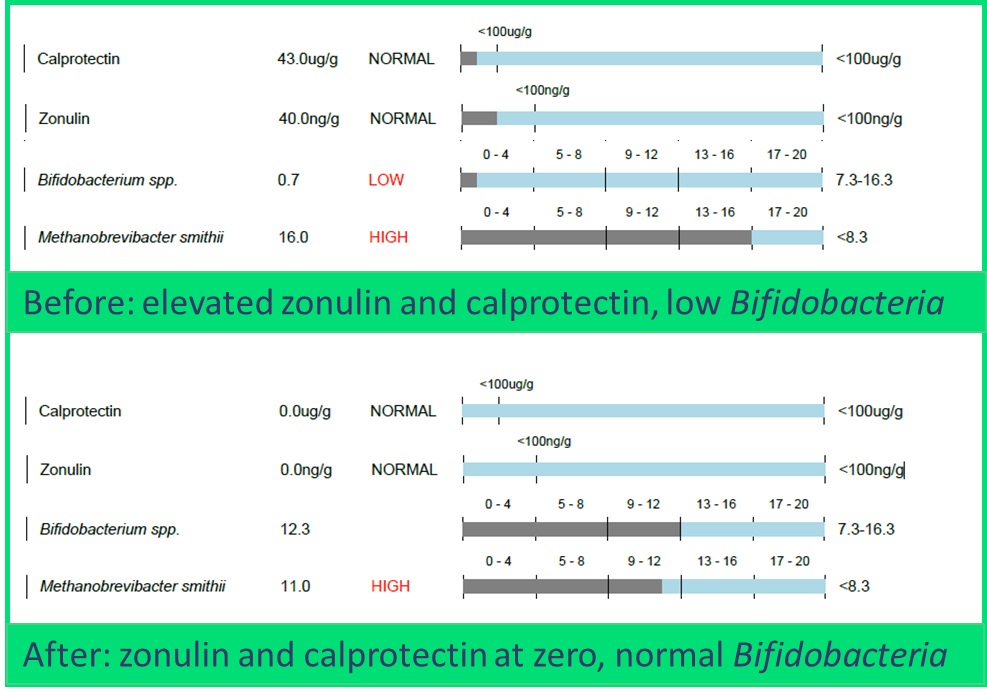
Sandra was experiencing chronic constipation, bloating and she also had a long term autoimmune disease. She wanted to ease her gut symptoms but also to optimise gut barrier defences for immune balance. Her initial GI Ecologix test showed some raised markers of inflammation and leaky gut, not excessively, but definitely more than what would be considered optimal. Some of her beneficial bacteria were low and various unwanted bacterial strains were present including high levels of methane-producing bacteria linked with constipation.
She followed a comprehensive tailored protocol and re-tested after 3 months. All of her markers were significantly better. Though the methane-producing bacteria had reduced, it was still present and needed maintenance to reduce her risk for constipation.
Key findings (excerpt from test):
- Higher than optimal levels of zonulin (leaky gut) and calprotectin (inflammation) which were reduced after 3 months
- Very low levels of important beneficial Bifidobacteria which were restored to good levels
- High levels of methane-producing bacteria, associated with constipation, which reduced after 3 months but still needed further support to manage