


Amino Acid Profile


Learn More about our Amino Acid Profile

Blood test (phlebotomy)

This is a blood test which assesses the level of amino acids in the blood. This can be helpful in malabsorption issues but the pattern of amino acids can also be indicative of metabolic blocks. When one amino acid in a ‘chain’ or pathway is high and the next is low, this can indicate a block in this pathway. This is usually only found in complex disorders of mitochondria and chronic fatigue disorders.

Conversely, very high levels of amino acids are found in insulin resistance.

Phlebotomy can be carried out at our Dublin clinic or locations around the country. Please enquire with our team. Phlebotomy carries an additional charge.

This test measures:

  • Glycine, alanine, serine, threonine, methionine, taurine, phenylalanine, tyrosine, tryptophan, histidine, aspartic acid, asparagine, glutamic acid, glutamine, arginine, lysine, ornithine, citrulline, alpha-aminobutyric acid, and the branched chain amino acids (BCAA) valine, leucine and isoleucine

Works well with:

  • Functional Nutritional Profile
  • Bioactive B Vitamins

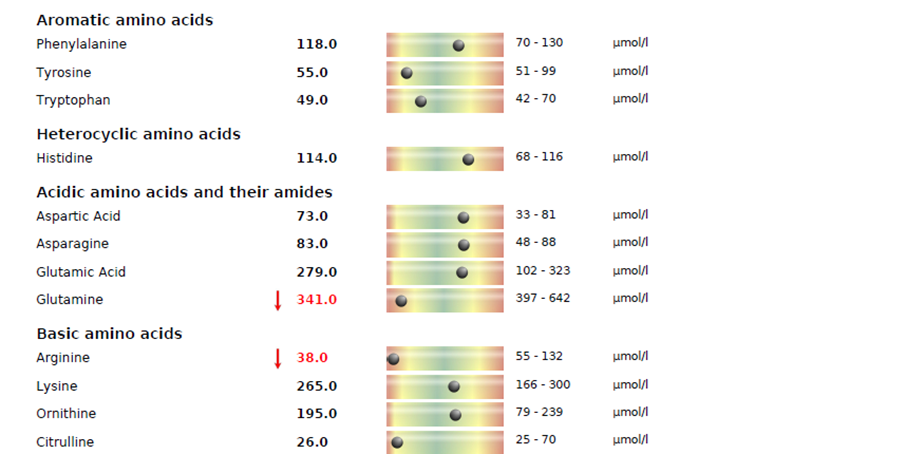
Daniel had Long Covid symptoms for over a year. He experienced severe fatigue, post-exertional malaise (PEM), migraine, dizziness and histamine reactions amongst others. As part of additional testing, Daniel also measured his amino acid profile.

This showed a number of other avenues to investigate or follow up on. He began to supplement with some of the low amino acids, though avoiding arginine in case of EBV viral reactivation. He also supported some pathways of amino acid metabolism. While this was not a cure, he felt a benefit from amino acid supplementation in terms of supporting energy and resilience.

Key findings:

  • Low levels of arginine and borderline low citrulline which can be implicated in ammonia production but are also essential for blood vessel health and blood flow
  • Low normal levels of tryptophan which is a suggested pathway in Long Covid
  • Low levels of glutamine which is not common but may play a role in energy and cognitive function in Long Covid
  • Ratio of phenylalanine to tyrosine was too high suggested a conversion issue or a metabolic block
Amino Acid Profile FAQ

How can this test help me feel better?
The Amino Acid Profile is a blood test that measures your body’s levels of essential and non-essential amino acids — the building blocks of proteins, neurotransmitters, and enzymes. Imbalances can affect energy production, mood, sleep, cognitive function, immune support, and recovery. By identifying deficiencies or imbalances, we can create a personalised nutrition and supplementation plan to support optimal metabolism and overall wellbeing.
Is this test still good as a ‘standalone’ or should I add it onto another test?
The Amino Acid Profile can be used as a stand-alone functional blood test, providing insight into protein metabolism, neurotransmitter precursors, and nutrient utilisation, along with more complex issues with the metabolism, energy production and chronic fatigue. The test is often underestimated in its value to provide information based on the variety of amino acid patterns it can yield. It can also be combined with other tests — like the Functional Nutritional Profile (FNP) or Organic Acids Test (OAT) — to give a more complete picture of your metabolic, nutritional, and oxidative status, particularly if you have complex or multi-system symptoms.
I’ve already done an Organic Acid test, is this different?
Yes. While the OAT assesses metabolic by-products, nutrient activity, and microbial metabolites, the Amino Acid Profile focuses specifically on blood levels of amino acids — including essential building blocks for neurotransmitters, hormones, and protein synthesis. Together, these tests complement each other, giving a more complete understanding of metabolic function and nutritional needs, but the Amino Acid Profile provides unique information that the OAT alone cannot reveal. If you’ve done an OAT but want deeper insight into amino acid balance, this test can provide actionable data.
I eat sufficient protein; can this test still help?
Yes. Even with adequate protein intake, factors like absorption issues, metabolism, stress, gut health, or genetic variations can lead to amino acid imbalances. The Amino Acid Profile shows how your body is actually using amino acids in a vast complex series of metabolic reactions, not just what you eat. Identifying significant patterns can allow us to tailor supplementation and dietary strategies for optimal energy, neurotransmitter function, and recovery. If you’re eating well but still notice fatigue, poor recovery, or mood changes, this test can reveal hidden imbalances.
I have Long Covid or ME/CFS – can this test help me?
Yes. Depending on your clinical picture, we may recommend adding markers that assess functional B12 activity or folate status, particularly when investigating fatigue, neurological symptoms, or anaemia patterns.
I actually feel great; can this test still help with aspects like performance or supplement planning?
Yes. Even if you feel well, the Amino Acid Profile is a good tool for optimisation. It can reveal: • Subtle amino acid imbalances affecting muscle recovery, energy, and endurance • Opportunities to fine-tune supplementation for cognitive performance • Gaps that could influence long-term health and cellular resilience Using this blood-based data, we can create a personalised plan to optimise performance, recovery, and overall wellbeing.