



Viral panel


Learn More about our Viral Panel

Dried blood spot (At-home) or Blood test (phlebotomy)

This is a simple at-home dried blood spot test. A finger prick of blood is transferred to a special card for analysis on return to the lab. Phlebotomy can be also carried out at our Dublin clinic or locations around the country. Please enquire with our team. Phlebotomy carries an additional charge.

This test measures:

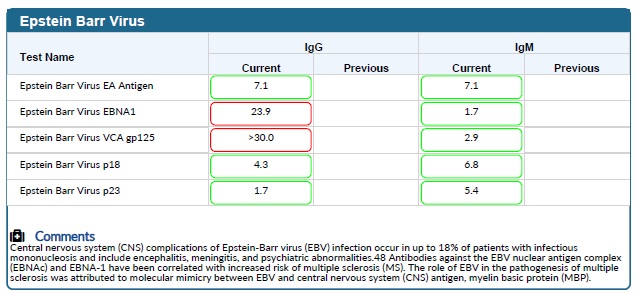
  • EBV – markers to differentiate prior infection from acute/ recent infection or re-activation (5 antigens covered including EBNA, EA Early Antigen and VCA)
  • Cytomegalovirus (7 antigens)
  • Human herpesvirus HHV-6 and HHV-7
  • Herpes Simplex Virus HSV-1 and HSV-2
  • Strep A (bacteria)

Brenda was 28 and had ME/CFS for ten years. She experienced significant fatigue, PEM and persistent sore throats, aching limbs and swollen lymph nodes. She did not fully know what had triggered her ME/CFS though she thought perhaps that she had a bad throat infection prior to her slowly deteriorating.

Though treatment for viruses is not without risk, and may not even have helped her symptoms, Brenda was keen to understand as much as she could about her illness. She tested positive for a prior EBV infection, though no active or reactivation of the virus was present at the time of the test. Her supplement protocol however was adjusted to avoid those that can re-activate EBV.

Key findings (excerpt from test):

  • Evidence of prior EBV infection, though no recent/ acute infection or re-activation
  • No evidence of recent or prior infection with cytomegalovirus, HHV-6, HHV-7, HSV-1, HSV-2 or Strep A
Viral Panel FAQ

How can this test help me feel better?
This Viral Panel assesses both IgG and IgM immune responses to: • EBV (Epstein–Barr Virus) — including markers that help differentiate past infection, recent infection, or possible reactivation (EBNA, Early Antigen, VCA and others) • Cytomegalovirus (CMV) • Human Herpesviruses HHV-6 and HHV-7 • Herpes Simplex Virus HSV-1 and HSV-2 • Strep A (bacterial marker) Many of these viruses establish lifelong latency after initial infection. In some individuals — particularly during periods of stress, immune suppression, hormonal shifts, or post-viral illness — they may reactivate or contribute to ongoing symptoms and illness. If you are experiencing persistent fatigue, swollen glands, recurrent sore throats, brain fog, or unexplained inflammatory symptoms, this panel can help identify whether viral reactivation or immune response patterns may be contributing. Understanding your viral immune profile allows for a more targeted strategy to support immune regulation, recovery, and overall resilience.
I have Long Covid/ME/CFS – can this test help me?
Post-viral syndromes such as Long Covid and ME/CFS are often associated with immune dysregulation and altered viral control. There is growing evidence that latent viruses — particularly Epstein–Barr virus (EBV) and Human herpesvirus 6 (HHV-6) — may reactivate in some individuals following significant immune stress, including SARS-CoV-2 infection. This test does not diagnose Long Covid or ME/CFS. However, it can help identify patterns suggestive of viral reactivation or persistent immune activation, which may be relevant when building a personalised management plan. For some patients, identifying and addressing viral immune burden forms part of a broader strategy to support recovery and reduce inflammatory signalling.
I’ve had glandular fever in the past — is there any point testing now?
Yes. Many people have previously had EBV (glandular fever), and the virus remains dormant in the body lifelong. This panel can help distinguish between past exposure and patterns that may suggest recent infection or reactivation. In individuals with persistent fatigue, recurrent sore throats, swollen lymph nodes, or immune fluctuations, understanding whether EBV or other herpesviruses are playing an active role can be clinically useful. It provides more detail than a simple “positive or negative” EBV test and it includes all the antigens needed for a more accurate analysis of reactivation, where other tests often miss one or more of these markers.
Are there any limitations to this test?
Yes — interpretation is key. • Positive IgG antibodies often indicate past exposure, not necessarily active disease. This test does include IgM antibodies that reflect more recent exposure • Viral reactivation patterns can be complex and do not always correlate perfectly with symptoms. • This test does not measure viral load directly in tissues. • It should be interpreted alongside symptoms, inflammatory markers, and overall immune health. This panel is best used as part of a broader root-cause investigation, particularly in cases of persistent fatigue, post-viral illness, immune dysregulation, or recurrent infections.